Helical piles earned their credibility in retrofit work, however the absolute most reliable tasks I find use all of them from the first day in new development. When the soil is actually dubious, the website is tight, or even the routine refuses to move, helical piles and also their cousins-- protection heaps, micropiles, as well as helical tieback anchors-- let you manage tons pathways along with marginal disturbance. The tools is compact, the installation is actually quiet, and capability can be confirmed as you go. That combo has actually modified the amount of people approach commercial foundation stabilization as well as deep foundation repair on brand-new builds.
This is a go through the complete arc: just how to decide if helical piles fit your project, just how to make them with peace of mind, what to assume during use and installment, as well as how to steer clear of the traps that incorporate cost or even delay. The details come from industry experience on workplaces, universities, fulfillment facilities, as well as clinical locations, together with a fair portion of less extravagant job like airlift terminals and canopies.
Where helicals fit in the business toolkit
Helical heaps are actually steel shafts with several helical plates, installed by torque into soil that may establish birthing resistance along those plates and arrow. The tons transmissions with coil bearing and shaft rubbing, at that point right into competent strata. For new construction, they contend most straight along with steered stacks and bored cylinders. There are also adjoining services that often survive the exact same illustrations: resistance stacks for reinforcement or even compression where resonance is limited, micropiles for severe tons in restricted websites, and helical tieback anchor installment where sidewise resistance or wall stabilization is actually critical.
The finest candidates discuss a style. The grounds are soft fill, organics, or even compressible clays down to 15 to 40 feets, underlain through sands or incredibly tense clay-based. Gain access to is constrained sufficient to create a big rig expensive or even difficult. The design needs a foreseeable negotiation profile under column tons that might vary coming from 40 to 250 kips, with some side disorders requiring uplift resistance. I also find helicals chosen when the development sequence is difficult-- for instance, when the slab needs to have to be placed early and also the skyscraper increases in periods-- considering that helicals become a trusted, testable element that performs certainly not depend on long treatment times.
A keep in mind on choices: protection stacks and also micropiles
Not every web site takes helical layers well. Crushed rocks with cobbles, frosty tills, or debris-laden urban packs can refuse coils or chew all of them up. In those situations, commercial resistance pile installation is actually a powerful pullout. Resistance piles, additionally referred to as press piles, rely upon the property or a response frame to port sections into the ground up until rejection, giving dependable compression capacity along with minimal noise and resonance. They are common in commercial foundation repair as well as structural foundation repair, as well as they sometimes handle brand-new constructions when pattern permits a response frame.
Micropiles are entitled to a place at the table when lots surpass what a helical or even resistance pile can hold in the readily available impact. Micropile installation makes use of small diameter pierced and also grouted steel factors, usually 5 to 12 ins, enhanced with threaded pubs or even casing. Micropiles can easily punch by means of garbage filler, enhanced ground, as well as also rock levels, after that connect in to heavy strata for excellent compression as well as pressure ability. They are slower and need grout coordinations, however on medical or even laboratory properties, or on parking structures where column loads exceed 300 kips, micropiles supply a clean, testable pathway. In practice, lots of commercial new-build structures integrate helical piles, micropiles, and also tieback anchors, selecting the ideal tool every grid line.
Getting the ground honest truth: geotechnical records that in fact helps
The geotech file is your roadmap. For helical pile design, you want greater than conventional strike matters. Seek ongoing testing via the stuffing as well as soft levels, system body weights, humidity contents, undrained shear staminas for clay-baseds, and also grain measurements circulation for sands. Hand penetrometer analyses and also torvane information help, but wallet penetrometer varieties alone can not bring the concept. A few power CPT soundings, if the budget endures it, usually purchase on their own because they show thin weak joints that split a bearing horizon.
In coastal markets and also waterway valleys, organics and peat layers prevail in between 4 as well as 12 feet. In much older urban regions, buried development particles is actually a wildcard. Either problem justifies exam probes along with propitiatory coils just before last design. Our company are going to typically rush 3 to five setup probings utilizing the designated gear to assess genuine torque versus intensity, at that point calibrate the style to what the web site will certainly permit. That little action can stop a workers coming from going after torque for half a day in a lense of silt they carried out not know existed.
Capacity, torque correlation, and the amounts that matter
Helical stack design trusts two pillars: theoretical bearing capability based upon coil geometry and ground strength, and also observational torque correlation during the course of installation. For most commercial helical pile installation, ability connects reasonably to last installment twist utilizing an aspect Kt, often in between 7 and also 12 for straight rays as well as 10 to twenty for round hollow segments, units in kip every kip-foot. The installer files twist in real time, and also the developer establishes a minimal twist limit for each style tons with a details element of safety.
These arrays are not universal. Kt depends upon pole geometry, coil size as well as thickness, ground kind, and also just how effectively the torque is actually evaluated as well as sent. I have observed Kt reduce to 6 on gentle delicate clay-baseds as well as climb to 18 in thick sands with consonant shaft heaps. That irregularity is actually why preproduction bunch tests are worth the time. A tiny course along with one pressure exam and also one compression examination, proof or static, may anchor the Kt for your project as well as hone your variables of safety and security. For ventures along with important uplift-- solar canopies, tensioned fabric establishments, or covers in wind corridors-- those uplift examinations are vital since clay adherence to shafts is actually hardly ever as charitable as schoolbook worths suggest.
Selecting the pile type and geometry
The option among helical piles, protection heaps, and also micropiles is actually certainly not simply regarding soil. It has to do with bunch situations, routine, and also the tools you can match on site. Within helical piles, choices accumulate swiftly: straight shaft versus round shaft, one helix versus multi-helix arrangements, helix diameters, and corrosion strategy.
Square shaft piles, frequently 1.5 to 1.75 inches, punctured tight clay-baseds and heavy dirts along with a lot less torsional requirement on the rig. They master tension and are actually a favored for helical tieback anchor installment since they permeate without roaming. Shot echoing sections, 2.875 to 4.5 ins OD, lug more compression as well as lateral bunch, as well as they endure buckling better in gentle levels. On pillar grounds with high squeezing and also some uplift, a hybrid strategy works: a consonant shaft lead, after that a transition to a straight shaft extension if needed to have to chase after twist via an obstinate layer.
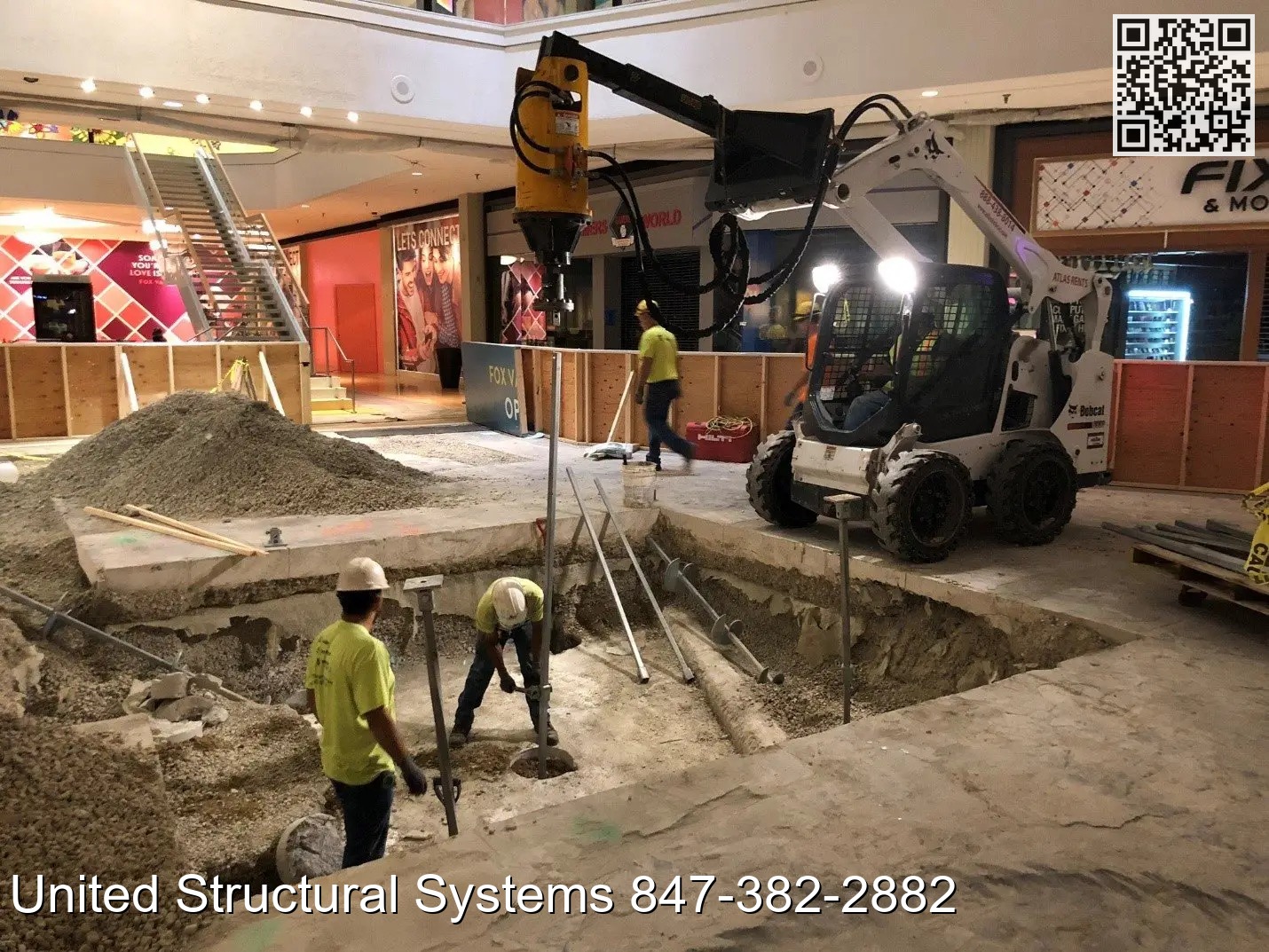
Helix size must match the bearing stratum. If you understand the heavy sand resides at 24 to 30 feet, a 10 to 12 inch coil might hold the design weight, but if the ground is weaker or even the weight greater, a 12 to 14 to 16 inch triple-helix stack may provide capability without including length. More helices improves installation torque, so affirm the gear's twist head can easily reach it. A lot of business gears used for helical anchors have heads rated coming from 7,000 to 30,000 foot-pounds, with gearboxes efficient in pressing to a handful of hundred revoltions per minute for penetration. If you need twenty kips of twist and also the accessibility alley merely enables a mini-excavator, you have a planning trouble, certainly not a setup trick.
Integrating uplift and side demands
Many office foundations possess nontrivial uplift: parapets recording wind bunch, canopies, light steel structures, also MEP shelfs put up coming from roofs. Helical tiebacks as well as helical anchors make that manageable, especially for maintaining walls as well as cellar diggings. Tieback anchors installed at angle of inclinations in between 10 and 30 levels may offer steady side as well as uplift protection without substantial deadmen. On one mid-rise along with a no lot series, the excavation assistance utilized a soldier heap and lagging wall structure linked back with helicals that later on became long-lasting supports for the cellar wall. That saved a 2nd mobilization as well as allow cement teams operate without bulky walers.
For stacks serving as both squeezing and stress participants, take note of hookup particulars. A likelihood exists that uplift regulates the bolt shear and also plate fullness on the pile limit. On a logistics center outside Chicago, the piles possessed plenty of squeezing ability, however a couple of grid lines near large dock doors found uplift coming from wind suction on a higher wall surface. The solution was basic: more thick cap plates along with four-bolt designs and also longer embedment into the footing, plus a double-nut detail to secure after twist check.
Corrosion, finishes, and also company life
Commercial brand-new bodies expect service lives of 50 to 75 years or longer. Helical piles stay in grounds where deterioration ranges from practically inert to hostile. The geotech document must include ground resistivity, chlorides, sulfates, as well as pH. Mildly harsh soils commonly validate additional wall surface fullness or propitiatory steel. Aggressive soils may demand hot-dip priming, plastic coatings, or even a cathodic defense planning. Developers in some cases ignore abrasion in the course of installation, which can easily scrape finishing off the top area as well as coils, therefore define layers along with practical scratching protection or usage galvanizing plus propitiatory allotment on the lead.
A sensible technique for a lot of sites: prime the lead and first expansion, after that utilize common steel over once you go out the wet region. On seaside jobs or near defrosting salt visibility, expand protection greater. There is no virtue in an even spec that neglects groundwater chemistry.
Detailing pile caps and integration along with foundations
The strongest stack is actually worthless if the bunch does not transfer safely. For commercial grounds, I as if a basic tense pile hat that embeds to record side shear and also uplift, with base floor covering steel connected meticulously around the hat. Avoid lean bearing plates grouted right into simple recesses. They make a challenging aspect and make quality control challenging. A pocket with 6 to 8 inches of cover, shear tricks if needed to have, and crystal clear accessibility for twist verification often tends to execute better.
Grade beams that cover between heap teams need to be actually specified along with adequate deepness to withstand the weak-axis flexing induced through differential resolution or beam imbalance. On mat slabs with dispersed helical piles, map the heap places onto a BIM model early. Clash diagnosis with underslab pipe, flooring drains, as well as trenching protects against pricey area acrobatics. It sounds typical, but the majority of the delays I find originated from a stack landing right where a 6 in drain intends to run.
Construction preparation and also mobilization
Helical rigs carry out not demand much of a site, yet teams do better with a hassle-free pad, clear hosting for segments, and also reliable access per grid line. Weather matters less than for punched rays considering that there is actually no spoil as well as no available gaps. Still, when operating in saturated clay-baseds, track matting aids makers keep angle and stops the heap coming from walking throughout the 1st handful of feet of bite.
Expect a great workers to mount 20 to 50 stacks each day depending upon length as well as twist, along with single-shift efficiency often around 800 to 1,500 linear feet. The bottleneck is rarely the twist head. It is the choreography: delivering segments to the device, making straight links quickly, as well as catching twist records with time and also intensity stamps.
Many tasks combine helical piles with commercial helical tieback anchor installation for momentary planet retention. In those situations, sequence matters. Put in and stress tiebacks first to support the cut, after that begin heaps, functioning from the within out. If the very same rig manages both, plan the tiebacks to avoid gone without food opportunity on the pile crew.
Installation, assessment, and twist verification
Installation needs to comply with a well-maintained design. Index the first helix square to the framework line and verify the rig pole is actually plumb. Development at a steady rate that avoids over-torquing and also soil remolding, incorporating extensions as required. The installer logs torque at least every feet, preferably digitally connected to an intensity sensing unit on the mast. When moving toward the target stratum, decrease the rotation a little as well as enjoy both torque and rate of innovation. If torque increases outstanding along with little bit of seepage, you are actually likely in a rich seam or even rocks lens. If torque rises however seepage continues to be stable, you may be pushing by means of a rigid clay-based level that are going to pass.
Stop at or beyond the sharpness at which the minimum required twist for the concept load is obtained, valuing a minimal embedment below any type of gentle layers. For instance, if your layout asks for 8 kips of twist on a round shaft with Kt of 12, the crew should see about 96 kip-feet, normally annotated on the records log. Perform not accept a pile that touches torque the moment on a thin joint and afterwards goes down. Demand a sustained torque reading across the ultimate 3 feets to verify authentic bearing in the intended layer.
Proof testing is a modest price for confidence. A straightforward squeezing exam making use of a reaction frame or a strain examination along with a ray of light as well as anchors will definitely affirm hardness as well as utmost habits. On a mid-size office complex, our team managed 4 tension examinations to 1.5 opportunities concept tons as well as documented prolongations within a couple of times the theoretical elastic expansion of the steel plus load-toe action. Those records permit the engineer dial in settlement predicts that agreed with the building model.
Quality difficulties and also how to stay away from them
Two recurring concerns leading my listing. First, setting up on a rapid schedule without preproduction probes. The staff at that point spends half a day fighting shallow twist spikes that do certainly not correlate to capacity. The remedy is straightforward: invest a half time prior to production along with a tiny test plan, then change coil measurements or lead setup accordingly.
Second, addressing relationship components delicately. Misaligned screws and also layers undercut uplift capability, as well as loose screws result in noise and activity that spooks inspectors. A habit that repays: a quick daily meeting where the supervisor, inspector, and engineer verify the torque crown gradation, examine the prior time's logs, as well as agree on any sort of improvements to cut spans, limit details, or even Kt assumptions. 5 to ten moments conserves hours.
Working around electricals as well as existing structures
On infill projects, utility disputes are inescapable. The advantage of helical anchors as well as micropiles is that you may thread between electricals if you have precise locates as well as the ideal gears. https://www.unitedstructuralsystems.com/who-we-serve/municipalities-and-government-agencies/ Pre-locate along with ground penetrating radar where possible, soft dig the top 3 to 4 feets near overloaded areas, as well as change stack space somewhat to preserve minimum facility to center distances. At some institution add-on, our team make up for pair of piles by 6 inches as well as rotated the helix design to miss a 1930s clay-based sewer by 4 ins. The as-built images eventually spared a potential crew from guessing.
For new cellar wall surfaces beside existing buildings, tieback anchors keep the digging lean as well as stay away from additional charge on the neighbor. Short-term helical tiebacks may be de-tensioned and cut back inside the residential property line if the long-term layout does certainly not need them. Long-term tiebacks need to be actually outlined with rust defense-- skin and also grout in dual rust security bodies where regulations require-- and also recorded along with crystal clear easements if they cross right into another parcel.
Coordination with concrete and steel
Good projects decrease handoffs. Planning just how stack hats, anchor screws, as well as strengthening steel will definitely meet. One efficient operations is actually to prepare helical pile altitudes a few ins low, then position a leveling grout mattress under the hat plate or even highly enhanced pile cap blockout. This takes in little sensitivity stack-ups. For steel pillars along with baseplates, take into consideration shop-welding the heap hat plates to quick installed blog posts that the rebar team can tie into, at that point screw the column to a grouted bottom later. By doing this, the helical crew carries out certainly not wait on support screw themes, and also the steel erector performs certainly not receive somebody else's alignment problem.
When groundwork repair service experience helps new builds
Contractors who specialize in commercial foundation repair view good enough failures to establish an instinct. That expertise converts properly to brand new building. For example, they know that foundation crack repair later is actually so much more pricey than obtaining bunch paths first. They see level shafts that might unite also much between turn in a nonuniform soil account. They additionally place dirts in all honesty, not favorably. When our team bring them in to preconstruction, the specification enhances, as well as modification orders shrink.
Documentation that endures turnover
Owners and facility groups hardly deal with the piles after the ribbon cutting. Then ten years later, somebody wishes to reduce a trench drain or incorporate a mezzanine. Leave them a clear record. A straightforward computer-aided-design coating with as-built pile locations, spans, torque logs, and the lots each heap was actually designed to hold is actually very useful. Consist of notes on rust security and test results. Establishment it along with the structural sketches and the BIM style. On one healthcare facility, that level stopped a contractor from sawing via three piles in the course of a phased makeover. A day of preparing steered clear of months of litigation.
Cost and timetable realities
Helical piles are actually not regularly less costly than superficial grounds. They save cash when they let you stay away from over-excavation of unsatisfactory dirts, when they eliminate dewatering and spoil monitoring, or when they increase steel erection through full weeks. On a 60,000 square foot office along with gentle clay-baseds over dense sand, helicals added around 3 to 5 percent over a pure superficial structure by component cost, however saved 10 times of timetable as well as notable danger. Resistance heaps and also micropiles move those varieties depending on cement, housing, and also screening. Extensively, anticipate:
- Helical heaps: efficient where gain access to is actually precarious, tons are moderate, and grounds make it possible for helical layers to chair reliably. Quick use, little spoil, proven through torque. Resistance heaps: practical where helicals may certainly not permeate cleanly, or even when you need to have squeezing capability without resonance. Depend upon response, often paired along with retrofit or organized brand-new build. Micropiles: greatest for high tons, impediments, or even stone. Slower, require cement as well as QA of bond length, yet very versatile.
Safety and also environmental benefits
Noise and resonance are reduced matched up to steered piles, which assists on medical centers, institutions, and laboratories. There is no damp concrete treatment to wait on, and also little bit of to no spoil leaves behind the ground. That lessens trucking and also internet site clutter. Diesel particulate is actually still a worry in enclosed or vulnerable places, but more recent gears along with cleaner motors, and also some electric torque heads powered coming from website power, are actually helping make a distinction. Align your safety planning along with the certain dangers: turning torque heads, above utilities, and pinch aspects at the relationships. A basic watchman unit and also lockout when modifying areas avoid very most incidents.
Bringing it all together on a typical project
Consider a three-story health care office complex on mixed filler as well as smooth clay, with design column tons of 120 to 180 kips, and a slab on quality that must stay crack-resistant. The geotech presents heavy sand coming from 26 to 34 feets. The team picks rounded bar helical piles with 12 and also 14 inch coils, aiming for setup twist around 120 kip-feet, utilizing Kt of 12. The structural developer asks for an element of protection of 2.5 in compression as well as 2.0 in tension. Two preproduction exams affirm capability at 1.5 times style tons along with less than half an inch of scalp action at company. A light level light beam connections stack teams at grid junctions. Border level ray of lights bring reasonable uplift coming from wind; hats utilize four-bolt layers along with 1 in bolts.
Helical tieback anchors stabilize a short cut for a submerged packing dock. The very same rig handles both scopes along with a routine that moves from tiebacks to turn in three times. The site workers logs an average of 1,200 linear feets of pile daily, with very little climate delays. Concrete starts a full week earlier than intended given that there are no available gaps or inspecting cleaning. The manager receives well-maintained torque logs as well as as-built places embedded in to the BIM design. 5 years later on, a tenant improvement cuts a trough far from pile lines without drama.
Final assistance for groups taking into consideration helicals
If you take nothing else, hang on to 3 ideas. Initially, receive the soil right and invest in a tiny screening phase also on simple web sites. Second, match the heap system to the load instance and get access to constraints, not only habit. Sometimes that suggests mixing helical piles, tieback anchors, resistance stacks, as well as micropiles within the same task for best worth. Third, always keep the information-- rust defense, cap links, torque proof, and also information-- limited. That is where ventures succeed or lose.
Commercial helical pile setup is actually certainly not a trick. It is a mature strategy that, when designed as well as installed with discipline, delivers predictable functionality, tidy jobsites, and also routines that standard contractors can create all around. Made use of together with commercial micro pile installation, commercial resistance pile installation, and also commercial helical tieback anchor installation, it complete a toolbox that allows you build along with confidence on dirts that made use of to push compromises.
For proprietors as well as concept groups, that implies fewer shocks, straighter wall structures, and also structures that carry out not need to have a footnote. For contractors, it implies a range you may consider, pattern, and also examination, with information to verify what the ground is actually performing, certainly not merely what our company hope it will certainly perform. And for future location supervisors, it suggests less phone calls about negotiation or foundation crack repair, and additional time invested in the component of the building that individuals really notice.